
Why Your Curls Don’t Last: It May Not BeYour Sleep Routine
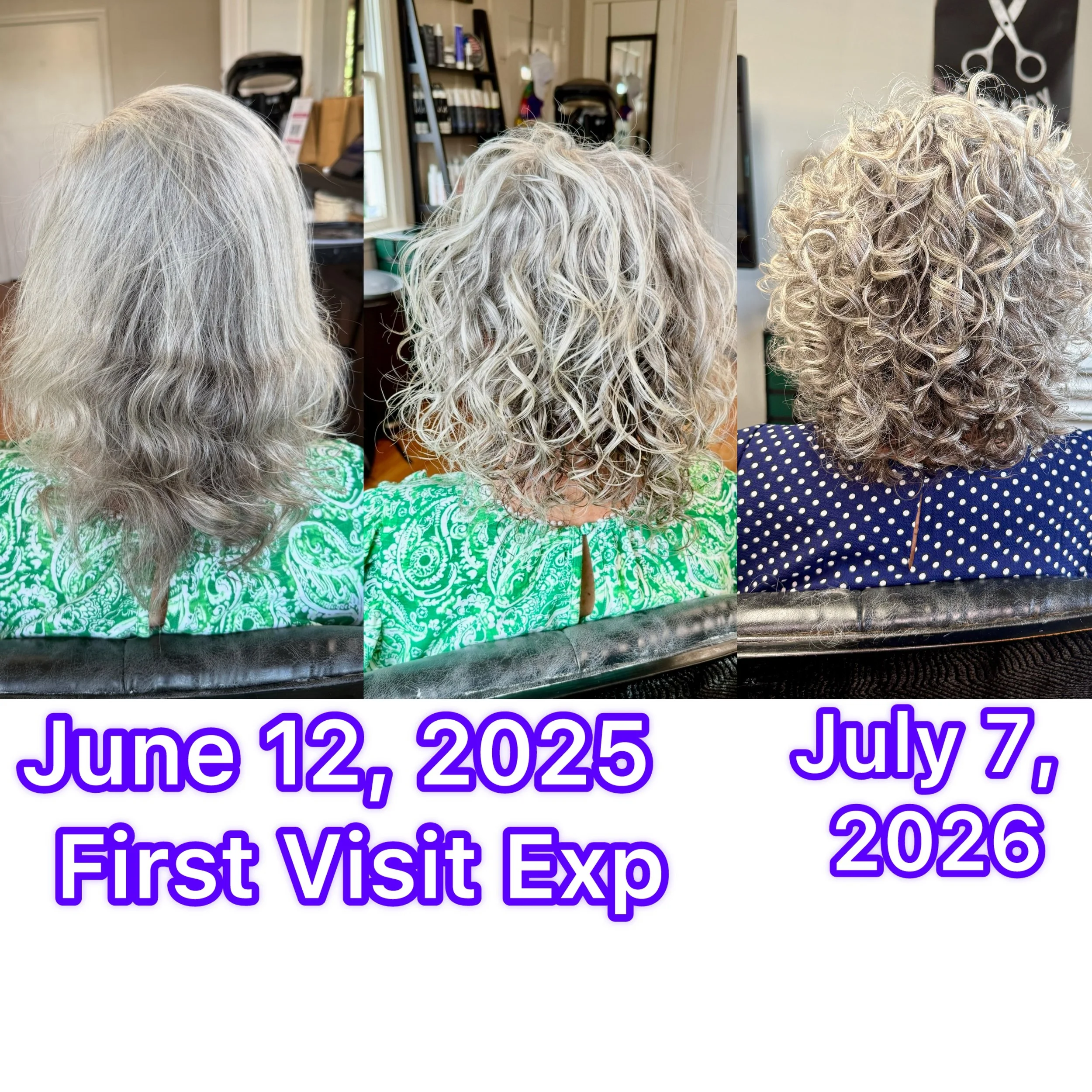
You go to bed feeling accomplished.
Your curls are defined. They have bounce. They have shine. Maybe this was finally the wash day where everything came together. You carefully gather them, put on the bonnet everyone told you to buy, arrange yourself on the satin pillowcase and go to sleep trying not to disturb what took entirely too much time to create.
Then morning comes.
You remove the bonnet, look in the mirror and wonder what happened.
Yesterday there were curls. Today there are stretched pieces, flat areas, frizz and a shape that looks nothing like the one you went to bed with. So you do what curly-haired people have been taught to do: you assume you did something wrong.
Maybe you need a better bonnet.
Maybe you need to pineapple your hair differently.
Maybe you need more gel.
Maybe you need a stronger gel.
Maybe you need another product altogether.
And before long, you are standing in front of a shelf full of products trying to solve a problem
nobody ever taught you to properly identify.
What If Your Bonnet Isn’t the Problem?
There is nothing wrong with protecting your curls while you sleep. Friction, compression and manipulation can absolutely affect a finished style, and reducing those things can help preserve it. Styling products matter too. The film created by a well-chosen styling product can provide definition, support and resistance against the forces your hair encounters throughout the day.
But there is an important distinction almost nobody talks about.
Protecting a curl is not the same thing as giving the hair the structural capacity to sustain one.
Imagine carefully wrapping a beautiful package around a box that has started collapsing underneath it. You can change the wrapping paper. You can reinforce the bow. You can become incredibly skilled at handling the package without disturbing it.
But at some point, you have to look at the box.
Your hair is remarkably complex. What you see on the outside—the curl, the shine, the bounce—is the visible result of structures and relationships happening throughout the fiber. Keratin organization, lipids, disulfide bonds, water relationships and multiple other components all contribute to the physical behavior of that strand.
When those systems are functioning well, the hair has different capabilities than it does when they have been compromised.
That matters tremendously when we talk about curls.
Creating a Curl Is Not the Same as Sustaining One
A styling product can help encourage your hair into a beautiful shape.
It cannot indefinitely compensate for a fiber that does not have the structural support necessary to maintain that result.
That is why I become far more interested when someone tells me, “My curls look amazing when I first style them, but they just don’t last.” Instead of immediately asking what bonnet they use, I want to know something much more fundamental:
What condition is the hair itself in?
Because sometimes what appears to be a styling problem isn’t really a styling problem at all.
And this is where curl care gets complicated.
We have been surrounded by words like moisture, hydration, protein, repair, strengthening, bond building, nourishing and restoration for so long that they almost feel interchangeable. They aren’t. They describe different approaches to different problems, and simply recognizing one of those words on a bottle does not tell you whether your hair needs what is inside it.
Understanding what products actually do beneath the fog of marketing is part of understanding curly hair.
More isn’t always better, either.
Hair can be under-maintained, but chasing “healthy hair” by continually adding another treatment is not necessarily the answer. The goal is not to do everything possible to the hair.
The goal is to understand what this hair needs.
If these are the kinds of conversations you’ve been looking for, follow us on Facebook and Instagram. I spend a lot of time there challenging the usual curl advice and helping people understand the science behind what their hair is actually doing—because the more you understand your hair, the less power the next miracle-product promise has over you.
Your Curls May Be Telling You Something
This is the part I wish more people understood.
When your curl looks beautiful immediately after styling and steadily collapses, that does not automatically mean you lack the right technique. It doesn’t automatically mean your gel isn’t strong enough. It certainly doesn’t mean you are somehow bad at having curly hair.
It is information.
The question becomes: information about what?
That’s where expertise matters.
There are many reasons a curl may struggle to sustain itself. Structural condition is one. Product accumulation may change how the fiber behaves. The characteristics of the strand itself matter. Humidity, manipulation and the strength and flexibility of the styling film matter. Previous chemical, thermal and mechanical stress can matter.
Several things may even be happening at the same time.
That is precisely why I resist the idea that there should be one universal curly-hair routine.
Curly hair is not that simple.
And neither are you.
What Healthy Curls Begin to Show Us
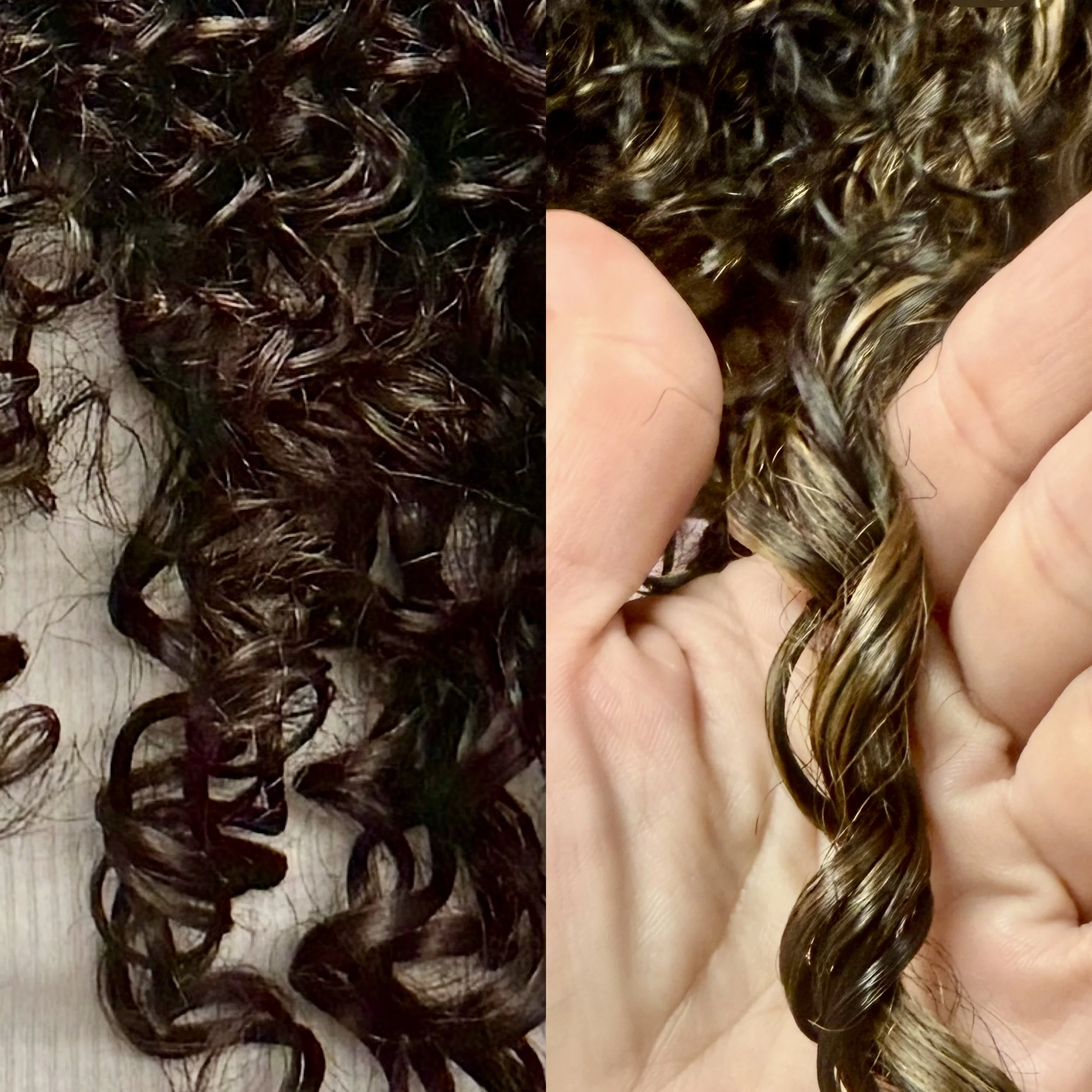
One of my favorite moments behind the chair happens when we begin supporting the hair differently and someone starts seeing what their curls were capable of all along.
The definition begins changing.
There is more shine. More bounce. Curls that once seemed to exist primarily through the ends begin reaching closer toward the scalp. The hair starts looking like what people imagine when they say they want their curls to look hydrated.
Then comes the smile.
Sometimes it is enormous.
Because the person looking in the mirror has usually spent years believing she needed to become better at controlling her hair. She has bought the products. Watched the tutorials. Changed techniques. Slept carefully. Refreshed constantly.
And now she is beginning to discover something entirely different.
Maybe her hair wasn’t asking to be controlled. Maybe it was asking to be understood.
Even more exciting is that this does not have to be the end result. With appropriate care, the results we see can continue changing over time. We are not simply trying to manufacture one spectacular wash day.
We are supporting the hair so that beautiful curl behavior becomes increasingly possible.
Before You Buy Another Bonnet
Keep the bonnet.
Keep the satin pillowcase if you love it.
Use a styling product that makes sense for your hair and the result you’re trying to achieve. Protect your curls from unnecessary friction and manipulation. Those things have value.
But if you are doing all of those things and still wondering why your curls disappear, stop assuming the answer must be another trick.
Your curls may be asking a much more interesting question.
What could I do if I had the support I actually needed?
That is the question I want to help you answer.
At Beautifully You Salon + Hair Lab, we don’t begin with what product everyone else is using. We begin by trying to understand the hair in front of us: its condition, its behavior and what may be standing between what you see today and what your curls are capable of becoming.
And you don’t have to live nearby for us to help you begin that process.
We offer both in-person and virtual consultations, and we have worked with people across the United States, Canada and several countries overseas.
If you’ve spent years changing products, changing techniques and changing your bedtime routine while still wondering why your curls won’t cooperate, perhaps it is time to change the question.
Schedule a consultation and let’s discover what potential we can unlock in your curls.
FOLLOW US ON SOCIAL