
“Okay. Then I Need Someone Who Actually Knows How to Figure That Out.”

There is a particular kind of exhaustion that comes from doing everything you were told to do and still not understanding your hair.
You changed the shampoo. You bought the deep conditioner everyone recommended. You learned about protein and moisture. You tried the viral routine, switched stylers, clarified, stopped clarifying, added oils, removed oils, learned your curl type, tried to determine your porosity, and somehow, you still have questions.
At some point, the question changes.
It stops being, “What product should I try next?”
And becomes, “Okay. Then I need someone who actually knows how to figure this out.”
That shift matters.
Because sometimes the problem isn’t that you haven’t found the right product yet. Sometimes no one has taken the time to understand what your hair is actually doing.
We Know More About Hair Than We Used To
Hair science has continued moving forward, even when some of that knowledge hasn’t made its way into everyday conversations about hair.
Researchers have spent decades studying the structure of the hair fiber, its lipid layers, chemical and mechanical damage, water interactions, environmental effects, and differences in hair morphology. Yet much of the advice consumers encounter still reduces incredibly complex hair to categories like “dry,” “damaged,” “high porosity,” or a curl-type number.
Those descriptions may tell us something.
They don’t necessarily tell us why your hair is behaving the way it is.
And that distinction can change everything.
Hair that feels dry might need something very different depending on what created that feeling. Hair that seems resistant to water may have characteristics that affect water interaction, or it may have accumulated material on the surface that changes how water and products interact with it. Frizz, dullness, inconsistent definition, breakage, and long drying times can each have multiple contributing factors.
If we begin with the symptom and immediately reach for a product, we may spend a lot of time treating what we can see without understanding what produced it.
That’s how people end up with bathrooms full of products and very few answers.
What If We Started With Understanding?
Think about beginning at the gym.
At first, you may be doing general exercises and learning how your body responds. As you become more knowledgeable, your technique improves. You recognize your strengths and limitations. Your routine becomes more specific. You stop doing things simply because everyone else is doing them and start making decisions based on what your body needs.
Caring for hair can work much the same way.
The goal isn’t one dramatic treatment that suddenly gives you completely different hair. And responsible hair care shouldn’t promise that every curl can become tighter, more defined, or transformed into someone else’s curl pattern.
The goal is to discover the potential of your hair.
That requires paying attention to what is actually there: its current condition, history, structure, behavior, and response. Then we can make informed decisions about products, techniques, timing, and order, and continue adjusting as the hair changes.
That is very different from chasing the next miracle product.
If conversations like this help you understand your curls differently, follow us on Facebook and Instagram. We’re continuing to translate hair science into information you can actually use.
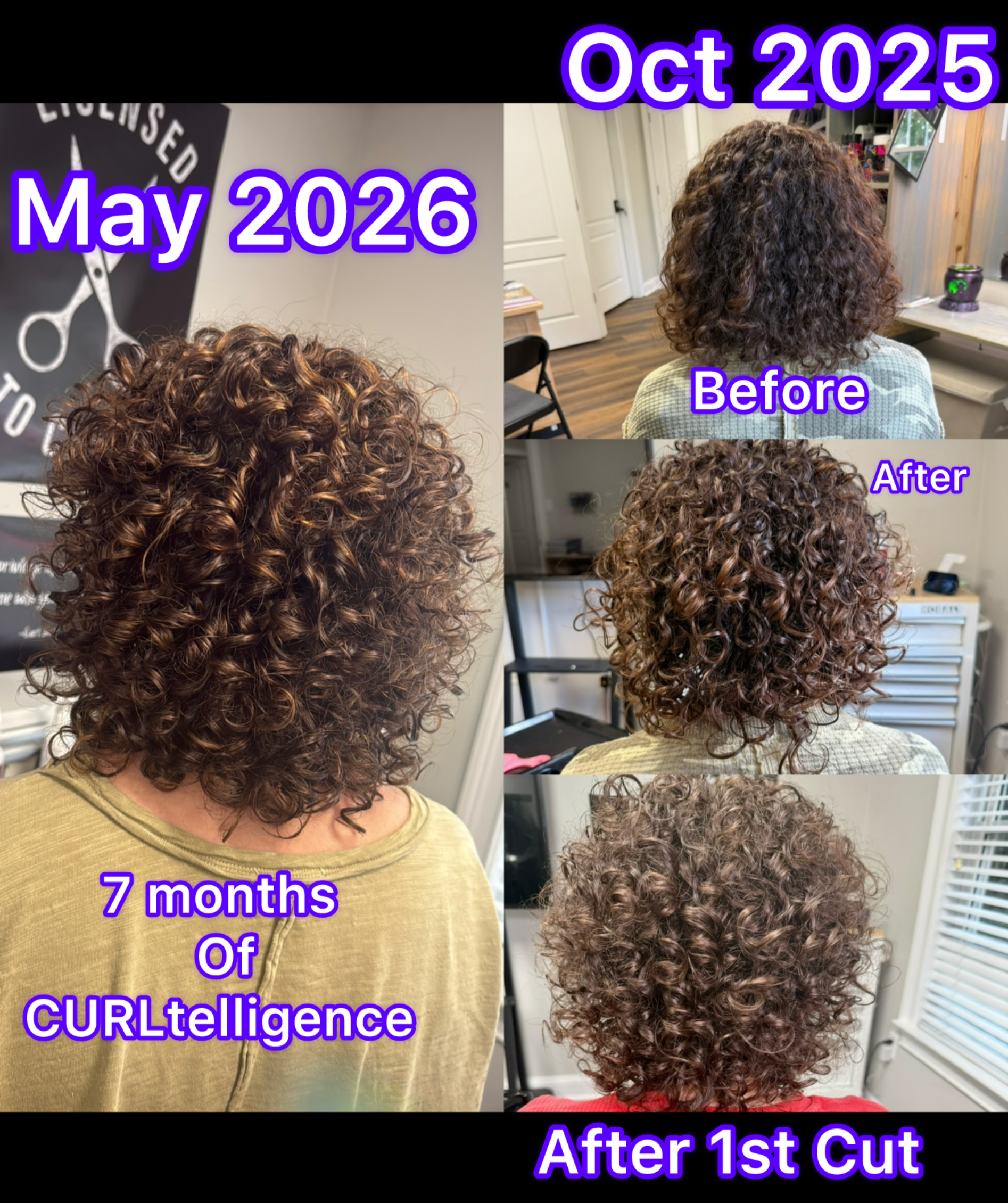
Where Art and Science Meet
Hairdressing will always be an art.
We need the eye that understands shape, balance, movement, and color. We need hands capable of turning knowledge into beautiful results.
But our medium is also biological material with a structure and chemistry of its own.
The better we understand that medium, the better questions we can ask before deciding what to do to it.
I believe our industry is ready to move beyond surface-level explanations and toward deeper understanding. Not because the professionals who came before us failed, but because knowledge evolves. Some long-standing ideas about hair have been challenged or refined as research has advanced. Our responsibility is to keep learning with it.
For me, that means spending time with research that may never appear in a cosmetology textbook or on the back of a product bottle, then asking a practical question:
What does this mean for the person sitting in my chair?
Because ultimately, research is only useful to my client if I can translate it into better questions, better observations, and better decisions.
The Salon Experience, Reinvented
Maybe that is what “The salon experience reinvented” really means.
Not pretending we have a magical answer for everything.
Not promising to turn your curls into something they were never meant to be.
And not blaming you or the last professional you saw because something hasn’t worked.
It means being willing to look deeper.
This isn’t about luck or blame. It’s about understanding what’s really going on so we can move forward together.
Your curls may not need another random product.
They may need someone willing to ask better questions.
I want to hear from you: What is the one thing about your hair that you’ve never been able to get a satisfying answer to? Tell me in the comments. Your question may become the next article that helps someone else, too.
FOLLOW US