
The Problem Isn't Your Hair. It's What's Sitting On It.

You're running late, so you don't think much about it.
You mist your hair with water, smooth in a little more leave-in than usual, scrunch in another layer of gel, and hope today will be different. It isn't. Your curls still feel heavy. The frizz refuses to settle. The definition disappears before lunch. As you catch one last glimpse of yourself in the mirror, the same question quietly slips into your mind.
What am I doing wrong?
It isn't the first time you've asked it.
Maybe your curls have changed. Maybe your favorite products just don't work anymore. Maybe you simply haven't found the right routine yet. Before long, another bottle finds its way into your shopping cart because if your hair isn't responding the way it used to, replacing the product feels like the logical next step.
But what if you've been solving the wrong problem?
What if the products never had a fair chance to begin with? What if, every morning you stood in front of the mirror evaluating your hair, you weren't really seeing your hair at all?
Long before you noticed a change, another story had already begun.
Every styling routine leaves behind a little residue. Your scalp contributes natural oils and perspiration. Minerals and metals from your water settle onto the hair. The environment adds pollen, dust, smoke, and microscopic pollutants you never see. None of these are unusual on their own. Together, they become one thing we simply call build-up.
Most people think of build-up as something dirty. I think of it as interference.
Build-up isn't one ingredient. It's one condition. It's the combined accumulation of everything your hair encounters. In small amounts, that's completely normal. In fact, some accumulation can even be protective. Hair wasn't designed to exist stripped completely bare.
The problem begins when yesterday's accumulation isn't fully removed before today's is added. Then tomorrow's settles on top of that. Layer after layer, what once protected the hair begins preventing it from behaving the way it was designed to. Water struggles to penetrate. Products can't interact with the hair as effectively. Your curls begin behaving differently, not because they've changed, but because something else is standing between them and the world.
The real tragedy is that we often blame the curls.
Halfway through reading this, you may already be wondering whether build-up could be affecting your own hair. If you'd like to see what this looks like under magnification, I regularly share microscope images, restorations, and real client transformations on my Facebook and Instagram pages. Sometimes seeing the evidence changes the way you think about your hair forever.
The easiest way to understand it is to think about cleaning your kitchen. You probably wipe down the countertops every day. That keeps everyday messes from becoming bigger problems. About once a month, though, you notice areas that need a little more attention. Maybe the microwave needs scrubbing, the backsplash has accumulated grease, or the sink needs a deeper cleaning. Then, every so often, you pull out the refrigerator and the stove to clean the places that routine maintenance never reaches.
But you don't pull the refrigerator away from the wall every time you cook dinner because it isn't necessary. In fact, if you did, you'd probably damage your floor...and your back. At the same time, imagine never moving it. Eventually, dust, grease, crumbs, and debris would accumulate in places your daily cleaning could never reach. Given enough time, those hidden areas would become a much bigger problem than the mess on the countertop.
Hair works the same way.
Most of the time, your hair needs the least intensive cleanser because it's designed to remove the normal accumulation of everyday life while preserving the balance your hair naturally depends on. Periodically, your hair benefits from a deeper cleanse to remove the build-up that routine cleansing gradually leaves behind. Then there are times when the hair needs a true detox to address the more stubborn accumulation of minerals, metals, and environmental pollutants that ordinary cleansing simply wasn't designed to remove.
That's why there isn't one cleanser for every situation.
Through CURLtelligence™, we use different types and strengths of cleansers because different types and amounts of build-up require different approaches. The goal isn't to use the strongest cleanser every wash. It's to use the right cleanser at the right time so your hair can reveal its true behavior instead of the behavior of everything sitting on top of it.
That distinction changes everything.
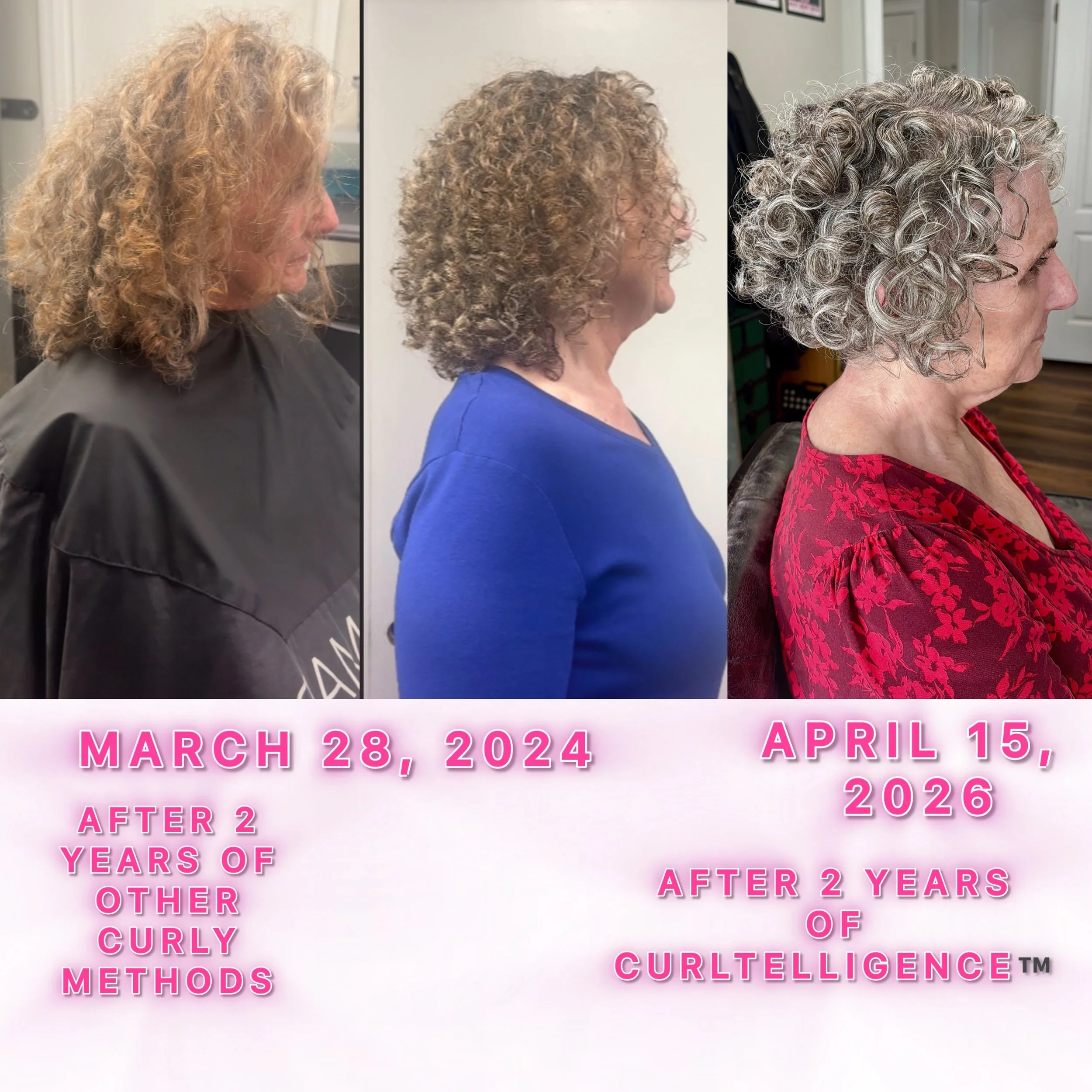
When you remove interference, you're no longer guessing whether a product works. You're no longer wondering whether your curls are simply "difficult." You're finally able to evaluate your hair instead of the barrier covering it. Ironically, that often means buying fewer products because the ones you already own finally have the opportunity to perform the way they were designed.
Maybe that's the question we should have been asking all along.
Not, "What's wrong with my hair?"
But, "Am I really seeing my hair?"
Because the goal has never been to force your curls into becoming something they aren't.
The goal is to remove what has been preventing them from becoming what they've been all along.
If you're ready to stop guessing and start understanding your hair, I'd love to help. A CURLtelligence™ consultation begins by discovering what your hair is actually telling us, identifying the type and degree of build-up present, and creating a plan based on evidence instead of assumptions. Your curls have been communicating with you this whole time. Sometimes they just need the interference removed before their message becomes clear.
FOLLOW US ON SOCIAL