
The Most Expensive Mistake Curly-Haired People Make
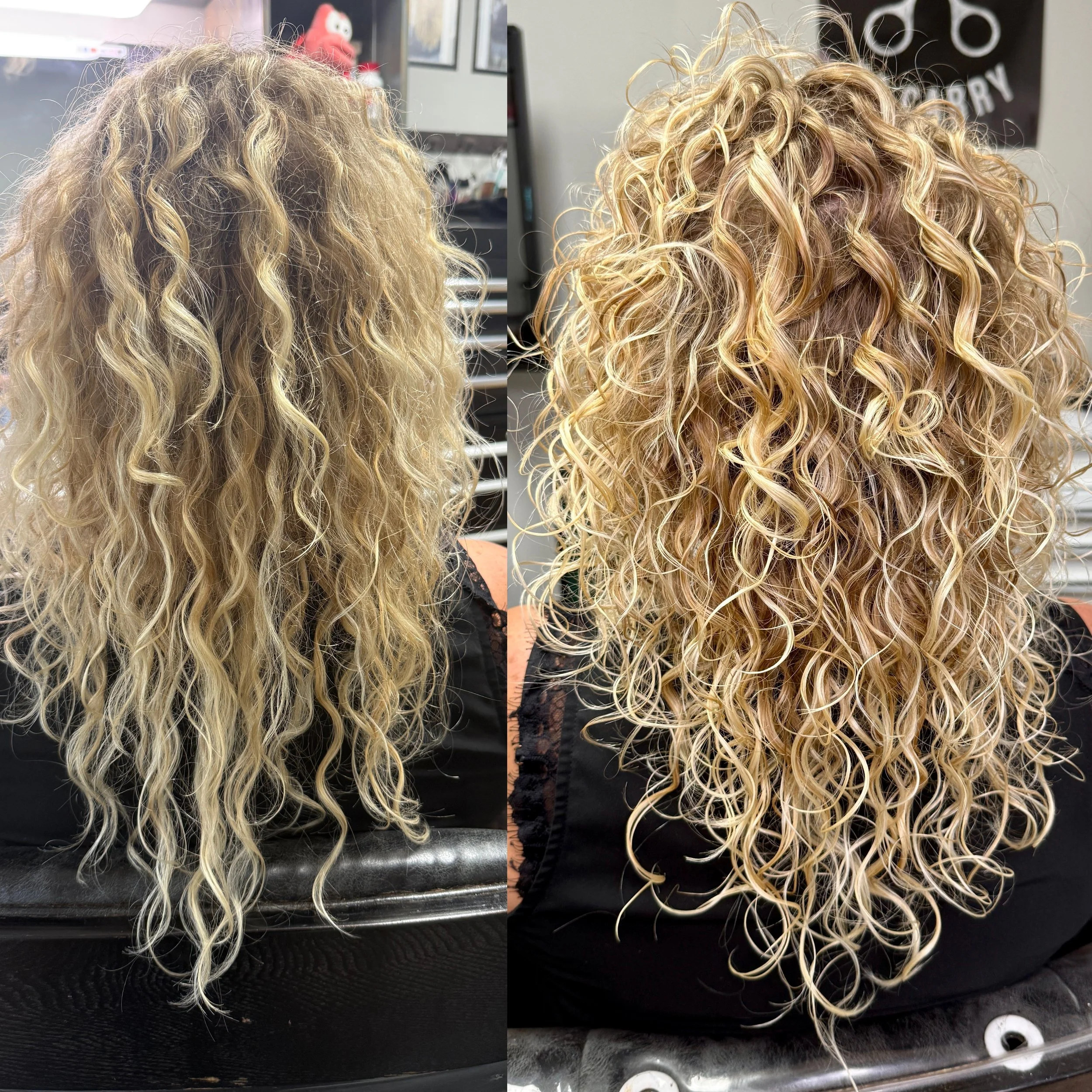
The most expensive mistake curly-haired people make is believing their hair is showing them its true potential.
Not because they’re uninformed. Because nobody has ever shown them another possibility.
If you have curly hair, you’ve most likely spent years searching for answers. Not because you’re vain. Not because you’re obsessed with your appearance. Because there is a difference between having curly hair and feeling like you understand it. Most curly-haired people know that feeling well. The sense that there is something they are missing. The feeling that their hair should be capable of more, but they can’t quite figure out what.
So, they search.
They try the products everyone recommends. They watch the tutorials. They buy the brushes. They learn the techniques. They experiment with routines. They visit stylist after stylist hoping the next person will finally explain what no one else has been able to explain.
Sometimes things improve. But the questions never fully disappear.
Why is my hair still frizzy?
Why won’t it hold volume?
Why does it seem to have a mind of its own?
Why does it never look quite the way I imagined it could?
Over time, something subtle begins to happen. The search continues, but expectations quietly shrink. Not because hope disappears. Because familiarity starts masquerading as reality. When you’ve lived with the same behavior for years, and most of the curly-haired people around you are experiencing similar struggles, it becomes easy to assume that’s simply what curly hair does.
Dryness becomes normal. Frizz becomes normal. Flat roots become normal. Inconsistent curl formation becomes normal. Difficulty styling becomes normal.
The problem is that normal doesn’t always mean healthy.
One of the most fascinating parts of my work is watching what happens when someone is shown a possibility they didn’t know existed. Not a fantasy. Not a social media illusion. A legitimate possibility rooted in the actual condition and behavior of their hair.
The response is almost always the same.
“I’ve never seen my hair do that before.”
Those words are far more significant than they seem. Because what they’re really saying is, “I didn’t know this was possible.”
For decades, much of the curl industry has operated from observation rather than direct understanding. Stylists made the best decisions they could with the information available at the time. Many of those ideas helped people. Some of them still do. But the beauty industry has a tendency to repeat information long after it should have been reexamined.
As our ability to evaluate hair has improved, one thing has become increasingly clear: many of the behaviors people attribute to curly hair are not always caused by what we thought they were caused by. For instance, dryness does not cause frizz.
Wanna know what does? Click here
What we often see is the cumulative effect of damage, environmental exposure, mineral buildup, lipid depletion, product accumulation, chemical services, and structural issues within the haircut. These influences don’t announce themselves. They quietly alter how the hair behaves until the altered behavior becomes the version of reality the client accepts as truth.
That realization eventually became the foundation of CURLtelligence.
At Beautifully You Salon + Hair Lab, we don’t begin by asking, “What curl pattern is this?”
We begin by asking, “What is preventing this hair from reaching its potential?”
The difference may sound small, but it changes everything.
When the goal is simply to identify a curl pattern, the conversation ends quickly. When the goal is to understand potential, entirely different questions emerge. Questions about the condition of the hair. Questions about how it has been treated. Questions about what factors may be influencing its behavior.
Most importantly, questions about what becomes possible if those barriers are removed.
The client featured in these photographs arrived with hair that had a story to tell.
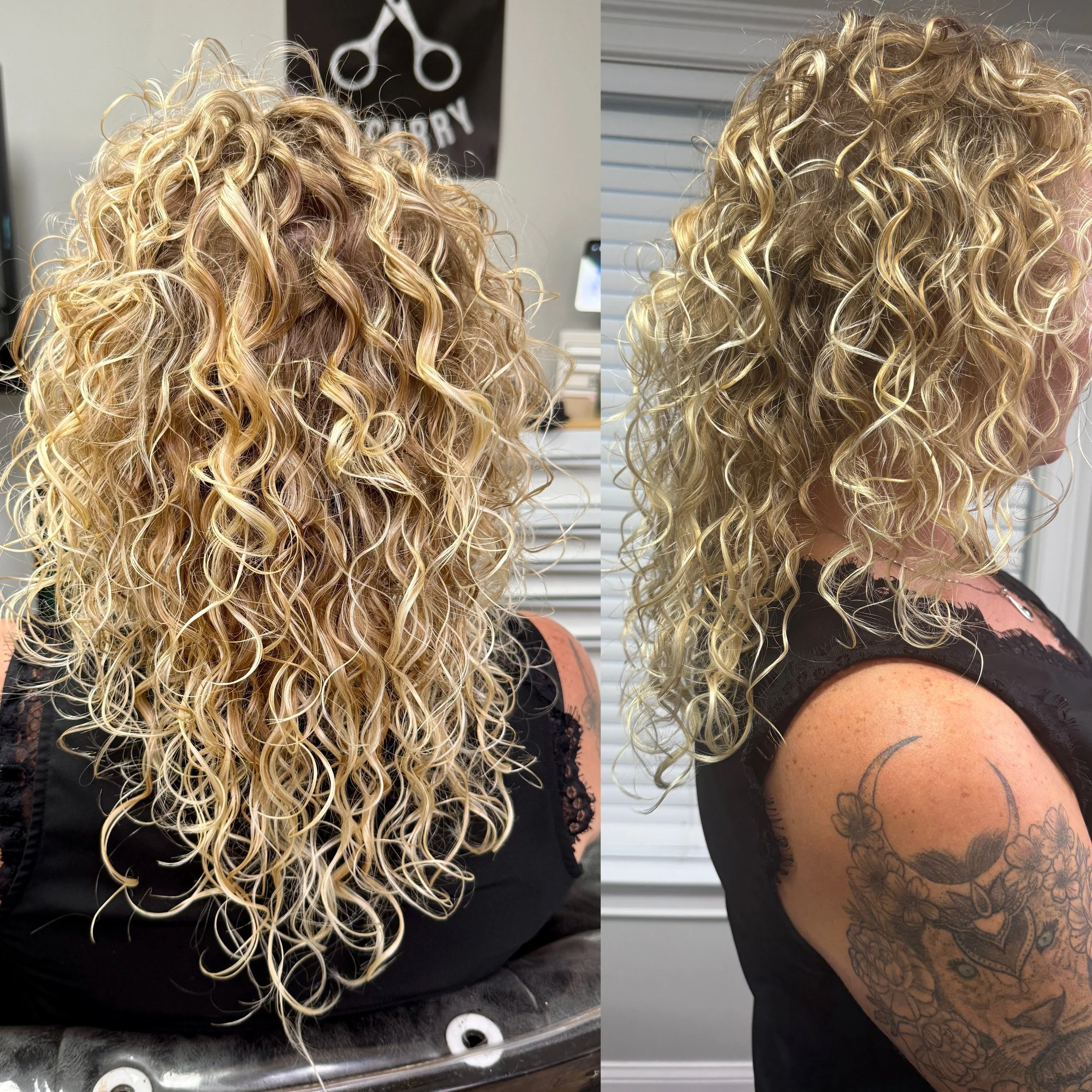
At first glance, most people would see curls. They might notice some frizz. Some dryness. A lack of volume through the crown. Perhaps they would assume the haircut needed work. Perhaps they would recommend a different product.
What I saw was incomplete information.
Before discussing a corrective haircut, we focused on restoration. Not because restoration was the goal. Because restoration was the tool that would allow us to see more clearly.
As the hair began to recover, details appeared that were difficult to see before. Areas where the shape lacked support. Areas carrying weight they shouldn’t. Structural challenges that will likely require a thoughtful corrective plan rather than a single appointment. Information that remained hidden while the hair was compromised.
That is what you’re seeing in these photographs.
Not a transformation. A revelation.
The restoration did not create a new curl pattern. It revealed behavior that had been lost beneath layers of interference. For the first time, we could begin evaluating what the hair actually wanted to do instead of reacting to what damage had convinced it to do.
That distinction is the entire point.
The goal of CURLtelligence has never been to force curls into a shape. The goal is to understand what the hair is capable of becoming, then create a plan that supports that potential.
This client’s journey is not finished. In many ways, it is just beginning. There is still work to do, decisions to make, and challenges to correct. But for the first time, those decisions can be based on accurate information instead of assumptions.
And that is where meaningful transformation begins. Not with a product, a haircut, nor even with a restoration. It begins the moment you realize the hair you’ve been seeing all these years may not be showing you its true potential.
Because once another possibility becomes visible, it’s very difficult to settle for anything less.